
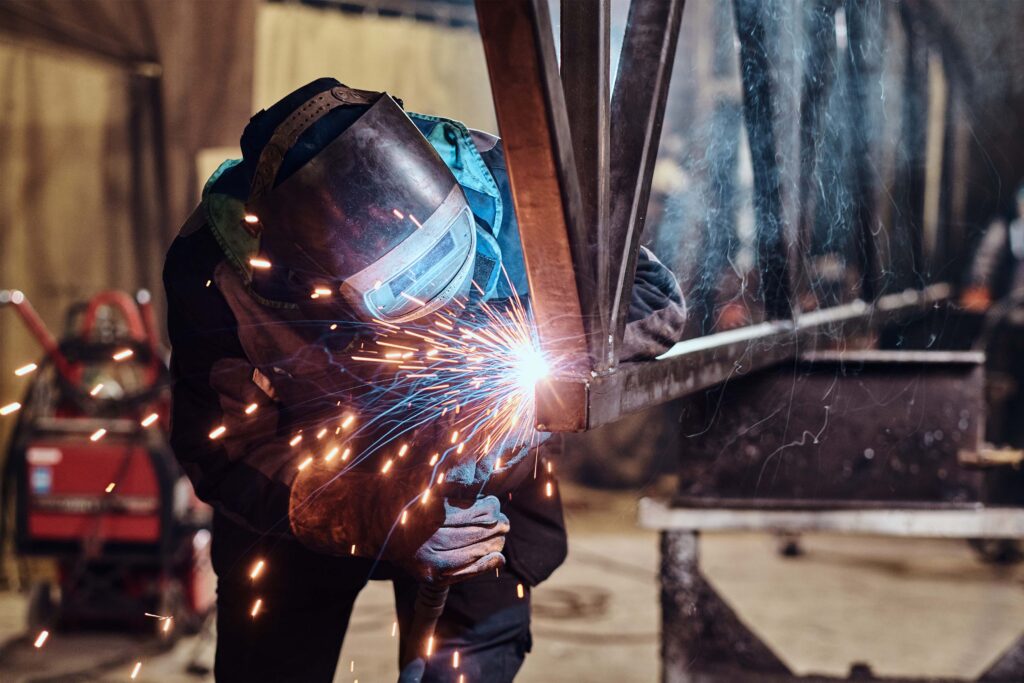
Finding skilled workers in manufacturing isn’t exactly getting easier.
Press brake setters, maintenance engineers, CNC machinists, welders, laser setters, and toolmakers.
Business across manufacturing and engineering are competing for many of the same skills. However, there’s something we think gets overlooked in conversations about the skills shortage.
You’re not just competing with other vacancies. Quite often, you’re competing with a job that person already has. That changes how you need to think about attracting them.
After six years recruiting within Manufacturing & Engineering, we’ve seen first-hand that attracting experienced people takes more than putting a vacancy online and waiting for applications.
So, if you’re wondering how to attract skilled workers in manufacturing, start by asking a slightly uncomfortable question…
Would you leave your current job for the opportunity you’re offering?
Skilled Workers Aren’t Necessarily Looking For Another Job
When a business has a vacancy, the natural assumption is that there will be skilled candidates actively searching for their next opportunity.
Sometimes there are!
Other times, many of the people businesses desperately want to hire are already employed.
They have a wage coming in every month, they know their shift, their manager and how long the drive to work takes. They also know when overtime is available, and ultimately, they know what to expect when they walk through the door every morning.
There’s security in that.
When you’re approaching someone with another opportunity, you’re not simply asking “Do you want this job?”, you’re asking “Is this opportunity good enough for you to give up what you already have?”
That’s a much bigger decision.
Salary Matters But Look At The Whole Package
Let’s say you’ve found an experienced engineer earning £16 per hour.
They live 15 minutes from work, like their shift pattern, regularly get overtime and have been with their employer for five years.
You offer them £16.20 per hour.
Is an extra 20p enough to make them leave?
Probably not. Particularly if the new role adds another 30 minutes to their commute or means changing shifts.
This is something we regularly discuss with clients when looking at how to attract skilled manufacturing workers.
Yes, salary matters. However, candidates rarely make career decisions based on one number alone.
They’re comparing the whole picture.
That can include:
- Salary and overtime
- Shift patterns and working hours
- Commute and travel costs
- Holiday entitlement
- Job security (this is a big one lately!)
- Training opportunities
- Career progression
- Workplace envrionment
- Benefits
- Flexibility
- Company culture and management
The question therefore isn’t a simple “Are we paying the market rate?” It’s “Are we offering enough to make someone WANT to move?”
And those are two very different questions.
Your Shift Pattern Can Narrow Down Your Candidate Pool
In manufacturing recruitment, shifts can make or break a decision.
Someone who has spent years working days might have built their entire life around those hours.
Childcare fits around them. Their partner’s working hours fits around them. Their hobbies, family commitments and social life fit around them.
Offer that person an afternoon or night shift and even a higher hourly rate might not be enough.
Of course, that doesn’t mean businesses should completely redesign their production schedules, a shift is a shift, but understanding how much that requirement reduces your available candidate pool helps you set realistic expectations.
If you need a very specific skill set and a particular shift and you’re offering the same salary as competitors, finding someone may take longer.
It’s not always a recruitment problem, it can just be the reality of the market.
Your Biggest Competitor Might Be Their Commute
This one is easy to underestimate.
Imagine offering someone an extra £1 an hour.
On paper, that’s a decent increase. But their current commute takes ten minutes and yours takes 45.
Suddenly, that extra money has to compensate for additional fuel, additional travel time, and potentially several hours of their week spent sitting in traffic.
The number might still work. But they might not.
When thinking about how to attract skilled workers, businesses need to consider the opportunity from the candidate’s perspective.
A job doesn’t exist separately from someone’s life. And sometimes convenience is worth more than another 50p an hour.
Good Candidates Don’t Always Have Time To Wait
You’ve found them. They’ve interviewed well. Everyone likes them. Then…nothing.
A few days pass. Then a week.
Perhaps someone needs to sign the salary off. Another manager wants to meet them. Or the business decides to interview a few more people before making a decision.
Meanwhile, your candidate is still talking to other businesses.
Or their current employer has started trying to keep them.
One of the biggest mistakes businesses can make when trying to attract skilled workers in manufacturing is assuming good candidates will wait.
Often, they won’t. This doesn’t mean making rushed hiring decisions. It just means removing unnecessary delays.
If you’ve found someone good, communicate with them. Give them feedback quickly. Keep the process moving.
Good recruitment should be thorough without being painfully slow.
Candidates Are Interviewing You Too!
An interview isn’t a one-way assessment anymore.
While you’re deciding whether someone could work for you, they’re deciding whether they actually want to.
What impression did they get when they arrived? Were people welcoming? Was the interviewer prepared? Did someone explain the role properly? Did they see the shop floor? Were the progression opportunities discussed? Could they picture themselves working there?
These things matter, particularly when you’re trying to attract someone away from secure employment.
You could offer a fantastic opportunity, but if the candidate leaves the interview feeling unsure about the business, getting them to accept could become much harder.
‘Competitive Salary’ Isn’t A Selling Point
We see this phrase everywhere. Competitive salary. But competitive compared with what?
What you paid two years ago? Other businesses locally? National salary average? Your direct competitors? What candidates are actually asking for?
The manufacturing job market changes. Therefore, salary expectations change with it.
If you’re struggling to attract skilled workers, current market feedback matters. Sometimes we’ll tell a client that their salary is absolutely fine. Other times, we’ll tell them it’s making the search significantly harder.
It might not always be the answer somebody wants, but having that conversation early can save months of searching for someone who isn’t coming.
Give Skilled Workers Something To Move Towards
Money can get someone’s attention. It isn’t always what gets them over the line.
For some candidates, progression matters more. Perhaps they’re operating a machine now but want to learn programming.
Maybe they’re a maintenance engineer who wants more responsibility.
Perhaps they want exposure to different machinery, new technology, or more complex work.
Others simply want to work somewhere that will invest in them. This is where businesses can differentiate themselves. Instead of only advertising what you need from the candidate, explain what the candidate gets from you.
What could they learn? Where could the role take them? What investment are you making in your equipment and people? What does progression actually look like? Why have your longest-serving employees stayed?
Those answers can be far more persuasive than another paragraph of job requirements.
Stop Relying Solely On Active Candidates
There’s another reason businesses can struggle to attract skilled manufacturing workers. The people they want aren’t necessarily applying for jobs.
An experienced press brake setter who is relatively happy at work might not spend their evenings scrolling job boards. Neither might a skilled CNC machinist, maintenance engineer, or welder.
But that doesn’t mean they would never move.
They might be open to the right opportunity. This is where manufacturing recruitment needs to go beyond advertising. Recruiters should be building relationships with candidates before the perfect vacancy appears. They should understand what would make someone consider moving and which businesses could suit them.
Sometimes the right candidate isn’t looking for you. You have to go and find them.
What If You Still Can’t Find Them?
There also comes a point where businesses need to question whether direct experience is genuinely essential.
We’ve seen vacancies remain open for months because a business wanted experience on one specific machine or within one specific manufacturing environment.
Eventually, the search changes.
Instead of asking: “Who has already done this exact job?”
We start asking “Who already has the fundamentals to learn it?”
That might mean someone who understands engineering drawings. Someone experienced in handling a particular type of metal. Someone who has set other machinery. Or maybe even someone who understands a manufacturing environment and has proven they can learn.
Transferrable skills won’t work for every vacancy. Some positions genuinely require specific technical experience from day one. But not all of them do. And when the skilled candidate you’re searching for simple isn’t available, developing someone can be far better long-term solution than leaving the vacancy open indefinitely.
Attracting Skilled Workers Means Thinking Beyond The Vacancy
There isn’t one magic answer to the manufacturing skills shortage. Throwing another job advert online certainly isn’t it. To attract skilled workers in manufacturing, businesses need to understand what they’re really competing against.
Sometimes it’s a ten minute commute. Other times it’s simply the comfort of knowing what tomorrow looks like.
That’s why good manufacturing recruitment isn’t finding someone who can do the job, it’s understanding what would make the right person WANT the job. And sometimes, that’s the difference between a vacancy sitting open for another few weeks, and finding someone who becomes part of your business for years.
If you’d like to discuss your hiring challenges, future workforce plans, or how trainees could help bridge the skills gap within your business, we’d love to have a conversation. Get in touch with us here.